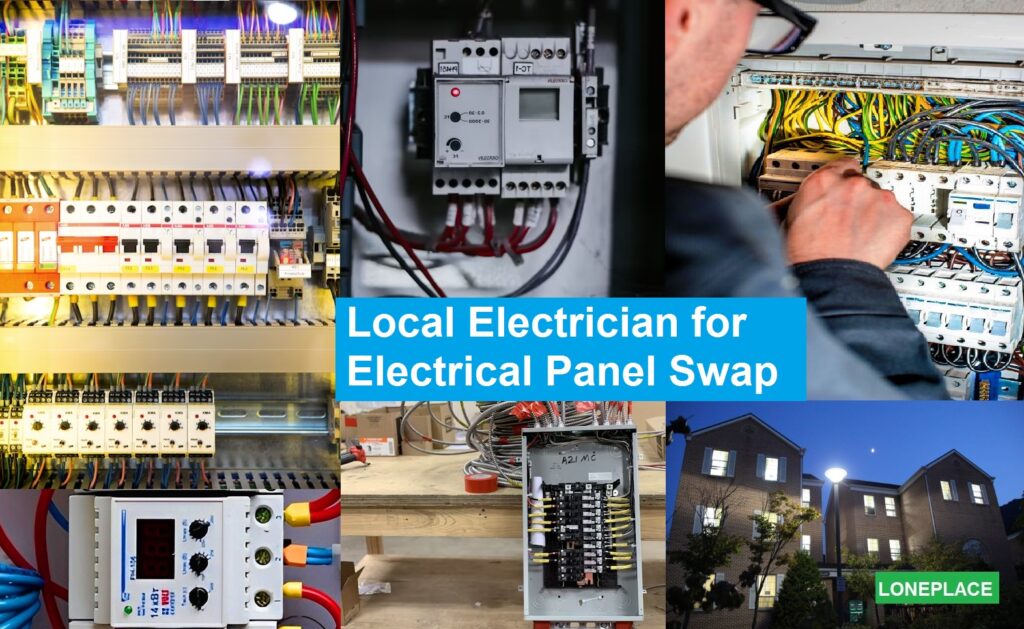
Local Electrical Panel Swap Near Me
If your home’s electrical panel is older than your kids’ childhood memories, it might be time for an upgrade. Outdated panels can trip breakers, spark safety risks, or leave you stuck during power surges. A residential electrician specializing in electrical panel swaps knows how to modernize your system safely and efficiently. Whether you’re adding solar, an EV charger, or just want peace of mind, a new panel ensures your home runs smoothly. Don’t wait for a blackout; let a pro handle the heavy lifting.
24/7 From Monday to Sunday, 9:00 AM – 11:00 PM (EST)
(Residential Electrical Upgrade, Replacement, Inspection, Testing, Repair, Installation, Integration, Maintenance, and Renovation Services, … & More)
Upgrading your electrical panel isn’t just about convenience; it’s about protecting your home and family. With the right electrician, the process is stress-free, fast, and tailored to your needs. From safety checks to NEC 2023 code compliance, they’ll guide you every step of the way. If you’re ready to upgrade, rest easy knowing your system is in good hands. Electrical panel swap service is one phone call away. Don’t let outdated wiring hold you back.
Residential Electrical Panel Swap Services
If your home’s electrical system feels like it’s holding on by a thread, it’s time to rethink your panel. Outdated boxes can’t handle modern demands—think smart homes, EVs, or even a new HVAC. Electrical panel swap services from a licensed residential electrician upgrade your setup safely and efficiently. They’ll assess your needs, handle the permits, and ensure everything runs smoothly. No more guesswork, no more risks—just a reliable power source for your family:
Full Panel Replacement (Old to New)
- Replace outdated, hazardous panels (e.g., Federal Pacific, Zinsco, fuse boxes) with modern, UL-listed panels.
- Upgrade from 100A to 200A or 400A panels to support high-demand appliances (e.g., tankless water heaters, central AC, EV chargers).
- Install weatherproof outdoor panels for detached garages, workshops, or pool houses.
Modernization for Future-Proofing
- EV Charger Integration: Install panels compatible with Level 2 EV chargers (40–50A) or DC fast chargers.
- Solar-Ready Panels: Ensure compatibility with solar inverters, battery storage systems (e.g., Tesla Powerwall), and grid-tied systems.
- Home Automation Readiness: Upgrade panels to support smart home hubs, whole-home surge protectors, or energy management systems.
Smart Panel Installation
- Install smart electrical panels with real-time energy monitoring, remote control via apps, and load-shedding features.
- Integrate with Google Nest, Amazon Alexa, or Apple HomeKit for voice-controlled circuit management.
- Add AI-driven diagnostics to detect anomalies like overloads, short circuits, or voltage drops.
Emergency Panel Repair/Replacement
- 24/7 emergency service for overheating panels, burnt breakers, or flickering lights.
- Rapid replacement of panels damaged by water, flooding, or electrical fires.
- Same-day service for critical repairs (e.g., non-functional main breakers).
Generator Interlock & Transfer Switch Installation
- Add manual or automatic generator interlocks for safe backup power during outages.
- Install transfer switches to switch between grid and generator power seamlessly.
- Configure panels for natural gas generators, propane generators, or solar + battery hybrids.
Aluminum Wiring Mitigation
- Replace aluminum wiring (common in homes built 1965–1973) with copper wiring to reduce fire risks.
- Use CO/ALR-rated breakers or pig-tailing solutions for temporary fixes.
- Add arc-fault circuit interrupters (AFCIs) to prevent fires caused by aluminum wire arcing.
Panel Safety Inspections & Code Compliance
- Conduct infrared thermography to detect overheating circuits or loose connections.
- Ensure panels meet NEC 2023 standards, local building codes, and insurance requirements.
- Provide certified documentation for home sales, mortgage refinancing, or insurance renewals.
Subpanel Installation for Dedicated Circuits
- Add subpanels for EV chargers, workshop tools, hot tubs, or garage EV charging stations.
- Balance loads across the main and subpanels to prevent overloads.
- Install dual-fuel subpanels for homes using both electric and gas appliances.
Whole-Home Surge Protection
- Install Type 1 or Type 2 surge protectors at the panel to safeguard against voltage spikes from lightning or grid issues.
- Add appliance-specific surge protectors for refrigerators, washing machines, or HVAC systems.
Battery Backup Integration
- Configure panels to support home battery systems (e.g., Sonnen, Enphase Encharge) for off-grid power during outages.
- Optimize battery charging/discharging schedules via smart panel apps.
Historic Home Panel Upgrades
- Retrofit antique or historic homes with modern panels while preserving architectural aesthetics.
- Use custom enclosures or vintage-style panels that blend with older decor.
- Install low-profile panels for homes with space constraints.
Energy Audits & Efficiency Optimization
- Perform load calculations to identify undersized panels or overloaded circuits.
- Recommend LED lighting upgrades, smart thermostats, or appliance timers to reduce strain on the electrical system.
- Provide energy usage reports with cost-saving recommendations.
Fire Alarm & Security System Compatibility
- Ensure panels can power hardwired smoke detectors, security systems, or doorbell cameras without tripping.
- Add backup power circuits for critical safety devices.
Permitting & Utility Coordination
- Handle all municipal permits, utility company approvals, and final inspections.
- Provide documentation for home sales, insurance claims, or mortgage refinancing.
- Coordinate with power companies for service line upgrades (e.g., replacing old overhead lines).
Upgrading your panel isn’t just about fixing a problem; it’s about future-proofing your home. A professional service takes the stress out of the process, from inspection to installation. You get peace of mind knowing your system meets current codes and handles your lifestyle. Whether you’re preparing for tech upgrades or just want safer wiring, experts have your back. Residential electrical panel swap services are here to make it simple, fast, and worry-free. Call today—your home deserves it.
Causes of Electrical Panel Swap
Your home’s electrical panel might be the unsung hero of daily life—until it starts tripping breakers, buzzing ominously, or failing to power your modern gadgets. Common causes for a residential electrical panel swap include outdated systems struggling with today’s high-demand appliances, safety hazards like overheating or corroded wiring, and the need to support upgrades like EV chargers or solar panels. Homes built before the 1990s often have panels that can’t handle today’s tech-heavy lifestyles, while aluminum wiring or faulty brands like Federal Pacific add hidden stressors. A licensed electrician can spot these issues early, ensuring your system keeps up with your needs without risking safety or efficiency:
| Warning Sign | What It Means | Risk Level |
|---|---|---|
| Frequent breaker trips | Panel is undersized for modern load | High |
| Burning smell or scorch marks | Overheating wires or loose connections | Critical |
| Buzzing or humming | Loose bus bar or failing breaker | High |
| Flickering lights | Overloaded circuit or poor connection | Moderate |
| Panel is over 30 years old | Components degraded, breakers may fail to trip | High |
Safety Hazards
- Outdated Panels: Older panels (e.g., Federal Pacific, Zinsco, or fuse boxes) are prone to fire risks due to faulty breakers or worn components.
- Overheating Panels: Panels emitting heat, burning smells, or buzzing sounds indicate overheating, which can lead to electrical fires.
- Aluminum Wiring: Homes built between 1965–1973 may have aluminum wiring, which corrodes easily and poses fire hazards if not upgraded.
- Frequent Breaker Trips: Overloaded circuits from undersized panels can trip breakers constantly, signaling unsafe conditions.
- Water or Flood Damage: Corrosion from water exposure compromises wiring and panel integrity, requiring immediate replacement.
Capacity & Modern Demand
- Increased Power Needs: Modern appliances (e.g., EV chargers, tankless water heaters, central AC) require higher amperage (e.g., 200A panels).
- Home Additions: Expanding your home (e.g., adding a garage, basement, or ADU) demands more circuits and power capacity.
- Solar Integration: Solar systems require panels compatible with inverters and grid-tied setups.
- EV Charger Installation: Level 2 EV chargers (40–50A) often exceed the capacity of older panels.
- High-Demand Appliances: Running multiple high-wattage devices (e.g., ovens, dryers, HVAC) strains outdated panels.
Code Compliance & Insurance
- Local Code Violations: Outdated panels may not meet NEC standards or municipal codes, risking fines or failed home inspections.
- Home Sale Requirements: Buyers or lenders may demand panel upgrades during inspections to ensure safety and compliance.
- Insurance Policies: Insurers may refuse coverage or raise premiums for homes with hazardous panels like Federal Pacific.
- Permitting Issues: Skipping permits for DIY panel work can lead to legal complications or voided warranties.
Technological Upgrades
- Smart Home Integration: Smart panels with energy monitoring or remote control require modern infrastructure.
- Battery Backup Systems: Panels must support solar + battery systems (e.g., Tesla Powerwall) for off-grid power.
- Generator Compatibility: Installing a generator interlock or transfer switch often requires a panel swap.
- Whole-Home Surge Protection: Adding surge protectors may necessitate panel upgrades for compatibility.
- Energy Efficiency: Upgrading to a smart panel can optimize energy use and reduce waste.
Aging Infrastructure
- Panel Lifespan: Most panels last 25–40 years; older units degrade and become unreliable.
- Corrosion or Rust: Panels exposed to moisture or pests may develop rust or damaged components.
- Loose Wiring: Aging connections can loosen, causing arcing or power fluctuations.
- Worn-Out Breakers: Breakers that won’t reset or feel hot to the touch indicate failure.
- Obsolete Brands: Panels from defunct manufacturers (e.g., Zinsco) lack replacement parts and pose risks.
Emergency Situations
- Electrical Fires: Post-fire repairs often require full panel replacement due to heat damage.
- Storm Damage: Lightning strikes or downed power lines can fry panels, necessitating urgent swaps.
- Pest Infestations: Rodents chewing wires or nesting in panels create fire hazards.
- Power Surges: Severe surges from grid issues can damage panels beyond repair.
Future-Proofing
- Resale Value: Upgrading panels boosts home value by meeting modern buyer expectations.
- Code Changes: Anticipating future NEC updates (e.g., AFCI/GFCI requirements) avoids future costs.
- Tech-Ready Homes: Preparing for smart devices, IoT systems, or AI energy management.
- Sustainability Goals: Supporting renewable energy systems (solar, wind) or electric heating.
Why Hire a Licensed Residential Electrician in the U.S.?
- Safety First: Professionals identify hidden risks (e.g., aluminum wiring, overloaded circuits) and ensure code-compliant installations.
- Permit Handling: Licensed electricians manage paperwork for local permits and utility coordination.
- Warranty & Guarantees: Reputable services offer warranties on parts and labor.
- Emergency Response: 24/7 availability for urgent repairs (e.g., water-damaged panels).
Ignoring the causes behind a failing panel isn’t just inconvenient—it’s a risk to your home and family. Whether it’s aging components, overloaded circuits, or future-proofing for smart tech, a panel swap addresses root problems before they escalate. A local residential electrician will guide you through the upgrade, prioritizing safety, code compliance, and reliability. Don’t wait for sparks to fly—electrical panel swap service is one call away to restore peace of mind and power your home’s next chapter.
Common Panel Brands, Technologies, and Types That an Electrician Can Deal With
When upgrading your home’s electrical system, the right panel makes all the difference. American-made brands like Square D, Siemens, Eaton, and Leviton lead the pack for reliability. Modern options range from standard 200A panels to smart panels with energy monitoring and solar-ready units designed for renewable energy integration. A licensed residential electrician in the U.S. knows which brands meet NEC standards and how to match the panel type (main breaker, subpanel, or hybrid) to your home’s needs. From troubleshooting outdated Federal Pacific boxes to installing cutting-edge tech, an electrical panel swap handles it all while ensuring code compliance and long-term performance:
| Brand | Best For | Key Feature | NEC 2023 Ready |
|---|---|---|---|
| Square D (Schneider) | Standard residential | Plug-on Neutral AFCI/GFCI | Yes |
| Siemens | Solar & smart homes | Solar-ready & IoT compatible | Yes |
| Eaton (Cutler-Hammer) | Tight spaces & retrofits | Compact CH series | Yes |
| Leviton | Smart load centers | Voice-controlled breakers | Yes |
| GE | High-density circuits | PowerMark Gold series | Yes |
| Emporia Energy | Energy monitoring | Real-time app diagnostics | Yes |
American Panel Brands
- Square D (Schneider Electric): Homeline for budget-friendly standard upgrades; QO Series for premium short-circuit ratings and solar/EV compatibility.
- Siemens: QP/QAF Series with corrosion-resistant components and smart home compatibility; solar-ready panels pre-wired for Enphase and SolarEdge inverters.
- Eaton: CH (Cutler-Hammer) compact panels for tight spaces; BR Series cost-effective for standard residential upgrades.
- Leviton: VR Series with advanced AFCI integration; Smart Load Centers for IoT-enabled homes.
- General Electric (GE): PowerMark Gold optimized for high-density residential circuits and ADUs.
- Westinghouse: WH Series affordable panels with robust breaker compatibility and weatherproof outdoor options.
Panel Technologies
- Smart Panels: Emporia Energy Vue and Lumin Meter offer real-time monitoring, AI load balancing, and integration with Google Assistant and Amazon Alexa.
- Solar Compatibility: Dual busbar panels for grid-tied systems; battery backup integration with Tesla Powerwall, Sonnen Eco, and Enphase Encharge.
- EV Charging-Ready: Dedicated 40–50A circuits for Level 2 chargers; 400A+ panels for commercial-grade residential setups.
- Arc-Fault & Surge Protection: AFCI breakers prevent fires from arcing; Type 1/Type 2 surge protectors guard against lightning and grid surges.
- Time-of-Use (TOU) Optimization: Smart meters align energy use with utility rate structures from providers like PG&E.
Panel Types
- Main Breaker Panels: Standard 200A for most homes; 400A for large estates with dual HVAC and whole-house generators.
- Subpanels: Dedicated circuits for EV chargers, hot tubs, workshops, and multi-family tenant metering.
- Hybrid Panels: Combines main breaker and subpanel functions (e.g., Siemens Hybrid Load Centers).
- Outdoor Panels: Weatherproof, corrosion-resistant enclosures for garages, pool houses, and coastal climates.
- Historic Home Panels: Low-profile and custom wood-framed enclosures that preserve vintage architecture.
- ADA-Compliant Panels: Accessible height, large-print labels, and voice-activated controls.
- Meter Main Panels: Combines electric meter and main breaker in one unit for new construction.
Code Compliance & Safety Standards
- UL Listed: All panels certified for safety by Underwriters Laboratories.
- NEC 2023 Compliance: Meets National Electrical Code requirements for AFCI/GFCI protection, EV charging circuits, and solar integration.
- State-Specific Codes: Adheres to CA Title 24 (solar mandates), NYC Electrical Code (historic retrofits), and Texas PUC regulations (storm-hardening).
Choosing the right American panel brand isn’t just about power—it’s about safety, efficiency, and future-proofing your home. Whether you need a durable Square D Homeline for a budget-friendly upgrade or a Tesla Solar-Ready panel for off-grid independence, a local electrician will guide you through the options. They’ll also tackle niche needs like aluminum wiring upgrades or historic home retrofits, ensuring your system meets modern demands. Don’t settle for outdated tech or risky DIY fixes. Electrical panel swap service with a trusted pro is one call away to secure your home’s energy future.
Tips for American Homeowners Considering an Electrical Panel Swap
If you’re weighing whether to upgrade your electrical panel, think of it as a long-term investment in your home’s safety and functionality. Many homeowners hesitate, but the right electrical panel swap can save you from costly repairs and modernize your power setup. Start by researching local codes and consulting a licensed electrician to avoid surprises. Don’t skip the permit—it’s a small step that keeps your project legal and stress-free. A new panel also opens doors for smart home tech, EV charging, or energy-efficient upgrades. If you’re unsure where to begin, a pro can guide you through the process without the guesswork:
| Factor | DIY Approach | Licensed Electrician |
|---|---|---|
| Permits & Inspections | Homeowner responsible; high denial risk | Handled entirely by pro |
| Safety & Liability | Electrocution & fire risk; no insurance | Insured, bonded, code-compliant |
| Warranty Coverage | None; manufacturer voided | Parts & labor guaranteed |
| Resale & Insurance | May fail inspection; policy voided | Certified documentation provided |
Assess Your Needs First
- Identify the cause: Determine why you need a swap (e.g., outdated panel, EV charger, solar integration, or safety hazards).
- Future-proof your system: Plan for future upgrades like smart home tech, EVs, or renewable energy systems.
Recognize Warning Signs
- Frequent breaker trips: Overloaded circuits signal an undersized panel.
- Buzzing/noises: Unusual sounds from the panel indicate loose connections or failing components.
- Burn marks or smells: Overheating panels are fire hazards.
Hire a Licensed Residential Electrician
- Verify credentials: Ensure the electrician is licensed, bonded, and insured in your state.
- Check reviews: Look for 5-star reviews and testimonials on Google and Yelp.
- Ask for references: Request examples of similar panel swap projects.
Understand Permit Requirements
- Local codes matter: A licensed electrician will handle permits and ensure compliance with NEC 2023 standards and state-specific codes.
- Avoid DIY shortcuts: Skipping permits can lead to fines or voided insurance claims.
Choose the Right Panel Type
- Standard: Square D Homeline, Siemens QP (budget-friendly).
- Smart: Emporia Vue, Lumin Meter (real-time energy monitoring).
- Solar/EV compatibility: Opt for panels with dedicated circuits for Level 2 EV chargers or solar inverters.
Prioritize Safety
- Never DIY: Panel swaps involve high-voltage risks; always hire a licensed professional.
- Emergency planning: Know how to shut off power in case of sparks, water damage, or overheating.
Evaluate Insurance and Home Value
- Insurance compliance: Outdated panels (e.g., Federal Pacific) may void coverage; upgrade to maintain policies.
- Boost resale value: A modern panel improves home appeal during inspections or sales.
Post-Installation Care
- Annual inspections: Schedule yearly checks to ensure panel performance and safety.
- Label circuits clearly: Make troubleshooting easier with updated diagrams and labels.
- Monitor energy use: Use smart panel apps to detect anomalies like overloads or surges.
Consider Future-Proofing Upgrades
- Add a subpanel: Reserve space for future circuits (e.g., hot tubs, workshops).
- Battery backup readiness: Install panels compatible with Tesla Powerwall or Enphase Encharge.
- Smart home integration: Ensure compatibility with Google Nest, Amazon Alexa, or Apple HomeKit.
Emergency Situations
- Water/flood damage: Turn off power immediately and contact a pro for panel replacement.
- Post-fire repairs: Replace panels damaged by heat or smoke, even if they appear functional.
Upgrading your panel isn’t just about fixing a problem; it’s about preparing your home for the future. An electrical panel swap ensures your system can handle modern demands, from avoiding hazards to unlocking new capabilities like EV charging or smart home tech. A reliable electrician will handle the details, so you don’t have to. Whether you’re renovating, adding appliances, or just want peace of mind, an electrical panel swap is a smart move. Don’t let outdated wiring hold you back. Electrical panel swap service is here to simplify the process. Call today, and let’s make your home safer, smarter, and more efficient.
Electrical Panel Swap Cost Guide
Understanding the cost of an electrical panel swap helps you plan without sticker shock. Prices vary by amperage, labor complexity, local permit fees, and whether your home needs rewiring or utility upgrades. A licensed electrician will provide a detailed, itemized quote after an on-site inspection. Below is a realistic breakdown based on 2026 U.S. market rates:
| Service Component | Low Range | High Range | Factors Affecting Cost |
|---|---|---|---|
| 100A to 200A panel swap | $1,800 | $3,500 | Panel brand, access difficulty, region |
| 200A to 400A upgrade | $3,500 | $6,000 | Utility service line upgrade required |
| Federal Pacific / Zinsco replacement | $2,000 | $4,000 | Rewiring, AFCI/GFCI additions |
| Smart panel installation | $3,000 | $5,500 | App setup, IoT integration, monitoring |
| EV charger dedicated circuit | $500 | $1,200 | Distance from panel, trenching needs |
| Whole-home surge protector | $300 | $800 | Type 1 vs Type 2, panel compatibility |
| Permits & inspections | $150 | $500 | Municipality and state requirements |
| Aluminum wiring mitigation | $1,500 | $4,500 | Full copper replacement vs pigtailing |
Pro tip: Always request three itemized quotes. The lowest bid is not always the safest—verify that each includes permit fees, UL-listed panels, and a written warranty on parts and labor. Many homeowners insurance providers offer premium discounts after a documented panel upgrade.
What to Ask Before Hiring an Electrician for Your Panel Swap
Not every electrician specializes in panel swaps. Before you sign a contract, ask these critical questions to protect your investment and ensure electrical panel swap service done right the first time:
- Are you licensed, bonded, and insured in my state for residential electrical work?
- Will you pull the municipal permit and schedule the final inspection?
- What panel brands do you recommend, and why?
- Is the quote inclusive of permits, materials, labor, and utility coordination?
- Do you offer a warranty on parts and labor? For how long?
- Will you provide a load calculation before recommending 200A vs 400A?
- How do you handle aluminum wiring or knob-and-tube if discovered?
- Can you integrate smart breakers, EV circuits, or solar during the swap?
- What is the projected timeline, and will I be without power overnight?
- Do you provide certified documentation for my insurance company?
A trustworthy electrician will answer every question patiently and provide references from recent panel swap projects. If they hesitate on permits, insurance, or load calculations, keep looking. Your home’s safety is worth the extra due diligence.
Frequently Asked Questions About Electrical Panel Swaps
How do I prepare my home for an electrical panel replacement?
Start by contacting a licensed residential electrician to inspect your current wiring and existing panel. Clear at least three feet of workspace around the panel and plan for a temporary power outage of four to eight hours. Inform all household members, cover sensitive electronics, and share any future plans—such as an EV charger or solar array—so your pro can size the new panel correctly during your electrical panel swap.
Do I need a permit to replace my electrical panel?
Yes. In the United States, a panel replacement requires a municipal permit to verify compliance with the National Electrical Code (NEC). A licensed electrician will pull the permit, schedule the rough-in and final inspections, and coordinate with the utility if a service line upgrade is needed. Skipping permits can void insurance, trigger fines, and complicate home sales.
How long does it take to swap out an electrical panel?
Most electrical panel swap projects take one to two days. A straightforward 100A-to-200A upgrade in a modern home may wrap up in a single day, while older homes with aluminum wiring, Federal Pacific panels, or service-line upgrades can extend to three days. Your electrician will give you a precise timeline after the initial load calculation.
Can a panel swap help reduce my electricity bill?
A panel swap alone will not lower your utility rate, but a modern, correctly sized panel eliminates energy waste from loose connections, overloaded circuits, and outdated aluminum wiring. If you choose a smart panel, real-time monitoring can help you shift usage off-peak, which may reduce bills on time-of-use rate plans.
What’s the best type of electrical panel for my home?
For most modern homes, a 200A UL-listed panel from Square D, Siemens, or Eaton is the gold standard. If you plan to add an EV charger, solar, or a smart-home hub, select a Plug-on Neutral load center with built-in AFCI/GFCI compatibility. A licensed electrician will match the brand and amperage to your exact load calculation.
What are the steps involved in replacing an electrical panel?
A typical electrical panel swap follows seven steps: (1) on-site inspection and load calculation; (2) permit acquisition; (3) utility power disconnect; (4) removal of the old panel and labeling of all branch circuits; (5) installation and grounding of the new panel per NEC Article 250; (6) circuit reconnection, torque verification, and live testing; (7) municipal final inspection and issuance of the certificate of compliance.
What are the risks of not replacing an old electrical panel?
Obsolete panels—especially Federal Pacific, Zinsco, and fuse boxes—are leading causes of residential electrical fires. Breakers may fail to trip, aluminum wiring can overheat, and insurance carriers may deny coverage. Delaying an upgrade also limits your ability to install modern appliances safely.
How do I handle an electrical panel that’s overheating?
Turn off the main breaker immediately if it is safe to reach, then call a licensed electrician for emergency service. Overheating is usually caused by overloaded circuits, loose bus-bar connections, or worn-out breakers. Never attempt a DIY fix—an overheating panel can arc and ignite within minutes.
What should I do if my panel is damaged by water or flooding?
Shut off power at the meter or main breaker immediately—do not touch the panel itself. Floodwater corrodes breakers, bus bars, and wiring insulation, creating hidden shock hazards. A licensed electrician will test for moisture intrusion and almost always recommend a full electrical panel swap to restore safe, code-compliant operation.
Is my old electrical panel a fire hazard?
If your panel is more than 30 years old, was manufactured by Federal Pacific or Zinsco, or contains aluminum wiring, it is likely a fire hazard. Warning signs include burn marks, buzzing sounds, and breakers that feel warm. Schedule a professional safety inspection to determine if a replacement is required.
Can a faulty electrical panel cause a fire?
Yes. Faulty breakers that fail to trip, corroded wiring, and overloaded circuits all generate excessive heat. Federal Pacific panels are especially notorious because their Stab-Lok breakers can appear closed while still conducting dangerous current. If you suspect a fault, treat it as an emergency and call a licensed electrician immediately.
What are the benefits of a smart electrical panel?
Smart panels provide real-time energy monitoring, remote circuit control, automated load shedding, and early fault detection via smartphone apps. They integrate with Nest, Alexa, and Google Home, and can optimize solar self-consumption when paired with battery storage. The upfront cost is higher, but the safety and efficiency gains are significant.
Is it safe to use a portable generator with my current panel?
Only if you have a professionally installed generator interlock kit or transfer switch. Plugging a generator directly into a wall outlet (backfeeding) energizes utility lines, endangering lineworkers and violating NEC codes. If your current panel cannot accept an interlock, a licensed electrician can perform an electrical panel swap to a generator-ready model.
Can I add a generator interlock during a panel swap?
Absolutely. Installing a manual or automatic interlock during your panel upgrade is the most cost-effective approach. The electrician will select a panel with a built-in interlock mount, ensuring safe isolation between grid and generator power and full code compliance from day one.
How do I upgrade my panel for a home addition or EV charger?
Start with a formal load calculation. Most EV chargers require a dedicated 40A or 50A circuit, and large additions often push total demand past 100A. A licensed electrician will recommend a 200A or 400A panel, install any necessary subpanels, and coordinate with the utility for a service-line upgrade if the existing drop is undersized.
What’s the difference between a 100A and 200A electrical panel?
A 100A panel supports basic lighting and standard appliances in smaller homes. A 200A panel accommodates central air, tankless water heaters, Level 2 EV chargers, and solar inverters while leaving room for future circuits. If your home is over 1,800 square feet or you plan major electric upgrades, 200A is the modern minimum.
How do I know if my electrical panel is outdated or unsafe?
Watch for frequent breaker trips, flickering lights, burning odors, buzzing sounds, visible rust, and breakers that will not reset. Panels installed before 1990 are likely overdue for replacement. A licensed electrician can confirm safety with an infrared inspection and a detailed code-compliance report.
Can a panel replacement be done without turning off power?
No. The utility must disconnect power at the meter to eliminate shock and arc-flash hazards. Live panel swaps are extremely dangerous and violate OSHA and NEC safety standards. Your electrician will coordinate the disconnect and reconnection with the utility or meter department.
How does an electrical panel replacement affect my home’s value?
A modern, code-compliant panel increases resale value, speeds up buyer inspections, and satisfies lender and insurer requirements. Homes with outdated Federal Pacific or Zinsco panels often face price reductions or repair contingencies. A documented electrical panel swap is a strong selling point in any market.
Can an electrical panel swap fix my frequent power outages?
If your outages are caused by internal overloads—such as breakers tripping when the AC and dryer run simultaneously—then yes. A properly sized new panel with balanced load distribution will stop nuisance tripping. However, if outages are grid-related, you will need utility-side repairs or a backup generator solution.
When to Call a Pro for Electrical Panel Service
Some electrical issues demand immediate professional attention. If you notice any of the following, do not attempt DIY repairs—call a licensed residential electrician right away:
- Burning smell or scorch marks on or near the panel.
- Breakers that won’t reset or feel hot to the touch.
- Visible corrosion, rust, or water damage inside the panel enclosure.
- Flickering lights across multiple rooms simultaneously.
- Buzzing, humming, or sizzling sounds coming from the panel.
- Panel is 30+ years old or manufactured by Federal Pacific, Zinsco, or Stab-Lok.
- Planning major additions like an ADU, EV charger, or solar array.
Electrical panel work is not a YouTube tutorial project. One wrong connection can arc, overheat, or energize components that should be dead. A licensed electrician has the training, insurance, and tools to complete your electrical panel swap safely and pass municipal inspection on the first try.
Conclusion: Power Your Home with Confidence
Your electrical panel is the heart of your home’s power system. When it’s outdated, undersized, or hazardous, everything downstream suffers—from flickering lights to serious fire risks. A professional electrical panel swap replaces danger with reliability, giving you the capacity to run modern appliances, charge your EV, integrate solar, and manage your energy with smart technology.
By hiring a licensed residential electrician, you gain more than a new box of breakers. You gain peace of mind knowing the work is permitted, inspected, insured, and backed by a warranty. You gain documentation that satisfies insurers, lenders, and home buyers. And you gain a system built for the next 25–40 years of American residential life.
Don’t wait for the breaker that fails to trip or the spark that starts a fire. Whether you’re in a historic bungalow, a modern smart home, or anything in between, electrical panel swap service is one call away. Upgrade today and power tomorrow with confidence.
Ready to Upgrade Your Electrical Panel?
Our licensed electricians are standing by 24/7 for emergency replacements, scheduled upgrades, and free estimates. Serving homeowners nationwide with NEC 2023-compliant installations.
Service Areas: Alabama • Alaska • Arizona • Arkansas • California • Colorado • Connecticut • Delaware • Florida • Georgia • Hawaii • Idaho • Illinois • Indiana • Iowa • Kansas • Kentucky • Louisiana • Maine • Maryland • Massachusetts • Michigan • Minnesota • Mississippi • Missouri • Montana • Nebraska • Nevada • New Hampshire • New Jersey • New Mexico • New York • North Carolina • North Dakota • Ohio • Oklahoma • Oregon • Pennsylvania • Rhode Island • South Carolina • South Dakota • Tennessee • Texas • Utah • Vermont • Virginia • Washington • West Virginia • Wisconsin • Wyoming
Licensed • Insured • U.S. Licensed Electrician • Electrical Panel Swap Service
This guide is provided for educational purposes. Always consult a licensed professional before performing electrical work.